Trip Report: LSI Analyst Day 2010


LSI in the Big Apple

Why does LSI exist? In 2007, Bill Zeitler, former head of IBM’s Systems and Technology business said something to me that summed it up perfectly: “Industry revenue is growing at 9% and R&D spending is growing at 12%– we can’t afford to fund everything.”Bill retired a couple of years ago and the numbers have obviously changed—but the pressure to focus R&D dollars hasn’t.

So you want to be in the OEM business and help guys like IBM out? Why not? A deal with an IBM or HP can mean hundreds of millions of dollars in revenue and to a smaller company it can provide an enormous boost in valuation. The mindset of some companies that want to sell through OEM channels is “hey – let’s hire an OEM sales rep…someone with lots of contacts.” This mentality says we have a technology. It’s a hammer. Every OEM opportunity is a nail.

From what I can tell, this is not how LSI does business.

LSI is a company with $2.2B in revenue, gross margin in the mid-40’s, nearly $1B in cash and 5,400 employees. LSI does hard stuff like 40nm Physical Layer (PHY) macrocell technology, storage and networking silicon, other custom silicon, disk drive read channels, virtualization software and a boatload of other technology innovations that are difficult to build. It doesn’t sell direct.

Its business model is to invest in building technologies for OEM’s and then essentially syndicate its R&D expenditure across a large number of customers. Its customers get the benefit of lower R&D and they can still fill holes in their product lines. LSI’s willingness to customize is how its OEM’s can differentiate (if they can justify paying for that innovation). They also organize to service the heck out of OEM’s.

The Highlights

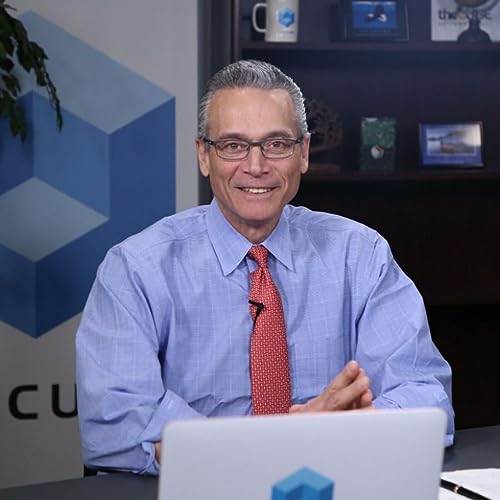
Here’s my quick take on the event and its content and a short video with Steve Fingerhut of LSI:

  • Grand Hyatt. NYC. Very good food. Crappy Internet. First class event. ~60 analysts by my count. Building nicely from “starter event” two years ago at SNW and last year in Allentown.
  • Major themes – financial turnaround; restructured the business. Growing again, nicely thanks to an OEM recovery in Q’s 2-4 in 2009. Strong outlook for 2010.
  • New 6 gig SAS switch to enable shareable DAS. Target is for small-to-mid sized businesses that can’t deal with the complexity of SAN. Good idea. Storage function has been migrating from the array back to the host—being pulled along by Microsoft and Oracle. Storage vendors need a strategy to deal with this.
  • Big SAS and shared DAS message (e.g. SAS switching) – Playing off of Microsoft and Oracle themes to aggressively commoditize SAN-based storage. LSI plays both sides of that fence with an increasingly strong SAN offering (e.g. SVM and other products).
  • Lots of emphasis on SSD, including a new PCIe SSD–similar to Fusion-io with a demo showing higher performance than Fusion-io. Despite the demo, LSI is not shipping yet and Fusion-io has a bunch of real customers and has been shipping for years (2-3).  Also, my bet is Fusion-io will have a new version of its solution out at some point that will leapfrog the LSI technology. Observers who watch this space will tell you correctly that raw performance benchmarks don’t usually tell the whole story because of things like context switching or “IO storms.” Users need to take into consideration the full application picture.
  • Big emphasis on scale out file and unified file and block; enabled by ONStor acquisition. Scale out NAS is a big theme this year with Ibrix/HP, IBM’s SONAS, Isilon gaining traction and NetApp perfecting ONTAP 8. LSI’s strategy is, as one would expect, to focus on the midrange and leave the big honking NAS to guys like IBM.
  • Another key message was LSI’s ability to integrate its own as well as third party IP. It uses an abstraction layer in its architecture to make IP more portable.

What was Missing?

It’s not all perfect at LSI. The company is often late to market with array-based innovations. Thin provisioning and storage virtualization are an example. The company has no data reduction (e.g. deduplication and compression) story and I thought the emphasis on VMware was light; other than a vCenter plug in demo. I would have like to have heard more about VMware API integration, especially around VAAI and VADP.

I’m hearing from some suppliers that they still don’t have the most up-to-date SDK’s from VMware -hmmm…wonder if the folks at Hopkinton have those yet J. This could be handcuffing LSI to an extent as I’m sure from VMware’s perspective, LSI is in line behind EMC, NetApp, HP and IBM.

I recognize that LSI is pretty good with integration and integration takes time. Many companies acquire firms and just keep selling whereas LSI really emphasizes integration. Nonetheless, with the re-structuring of LSI’s consumer and mobile business behind it, I’ll be looking for the company to be executing more as a market leader rather than following the trends.

I also spoke with CFO Bryon Look about the company’s gross margins which hover around 47%. For all the hard stuff LSI does you’d think margins could go higher. Of course Bryon couldn’t give me what I wanted but he did say that as the product mix shifts to software content LSI should be able to maintain its targets—which are in the mid 40’s. From my perspective if Emulex and QLogic can get 65% gross margins for the difficult stuff they do then LSI should be able to crack 50 points. But selling to large OEM’s is never easy.

On balance a very good use of my time. I think LSI’s model is coming together nicely and its business approach is by far the best OEM reference model in the storage business.

  • Share/Bookmark
  1. #1 by SteveFingerhutLSI on March 18, 2010 - 11:56 pm

    Hi Dave, This is Steve Fingerhut from LSI. It was great seeing you in New York. Thanks for covering our announcements. I’d like to add some more details around your comments re: the LSI PCIe Solid State Storage (SSS) Card not being responsive to burst/mixed workload.

    First, our solution leverages LSI’s high performance 6Gb/s SAS controller, the LSI2008. This is the same controller, drivers and management used by most server & storage OEMs to drive their high performance workloads across hundreds/thousands of HDDs and SSDs. In addition to offloading the workload from the CPU, the controller driving this solution has been vetted by the world’s largest OEMs under the most strenuous and “bursty” workloads, using real applications. No one else in the PCIe SSS segment can make that claim.

    Second, the performance issue then shifts to the SSD modules on the LSI solution – can they handle mixed/bursty workloads. The SSD modules on the LSI solution are developed by Seagate, with decades of experience delivering reliable, high performing drives for the most demanding enterprise applications. They are extending that expertise to the SSD modules used on the LSI PCIe card. Our benchmark efforts across multiple application workloads are proving that we are delivering leadership performance across real life, bursty & mixed workloads.

    Third, you mention that others may have updates that will perform better than our solution in the future. Key is the PCIe SSS market finally has two of the most proven Enterprise storage companies entering the market – LSI and Seagate. This will bring much needed experience, maturity and reliability that will inspire confidence in IT decision makers to adopt this technology. It also means we have the scale to offer multiple solutions to meet different performance, cost, and reliability requirements. Who else in the PCIe SSS can bring that same scale? Stay tuned for more details…

    It isn’t a surprise that you’re skeptical about our performance claims – I expect no less from you, Dave! You’ll see more details from LSI and Seagate in the coming weeks and months.

Comments are closed.

blog comments powered by Disqus